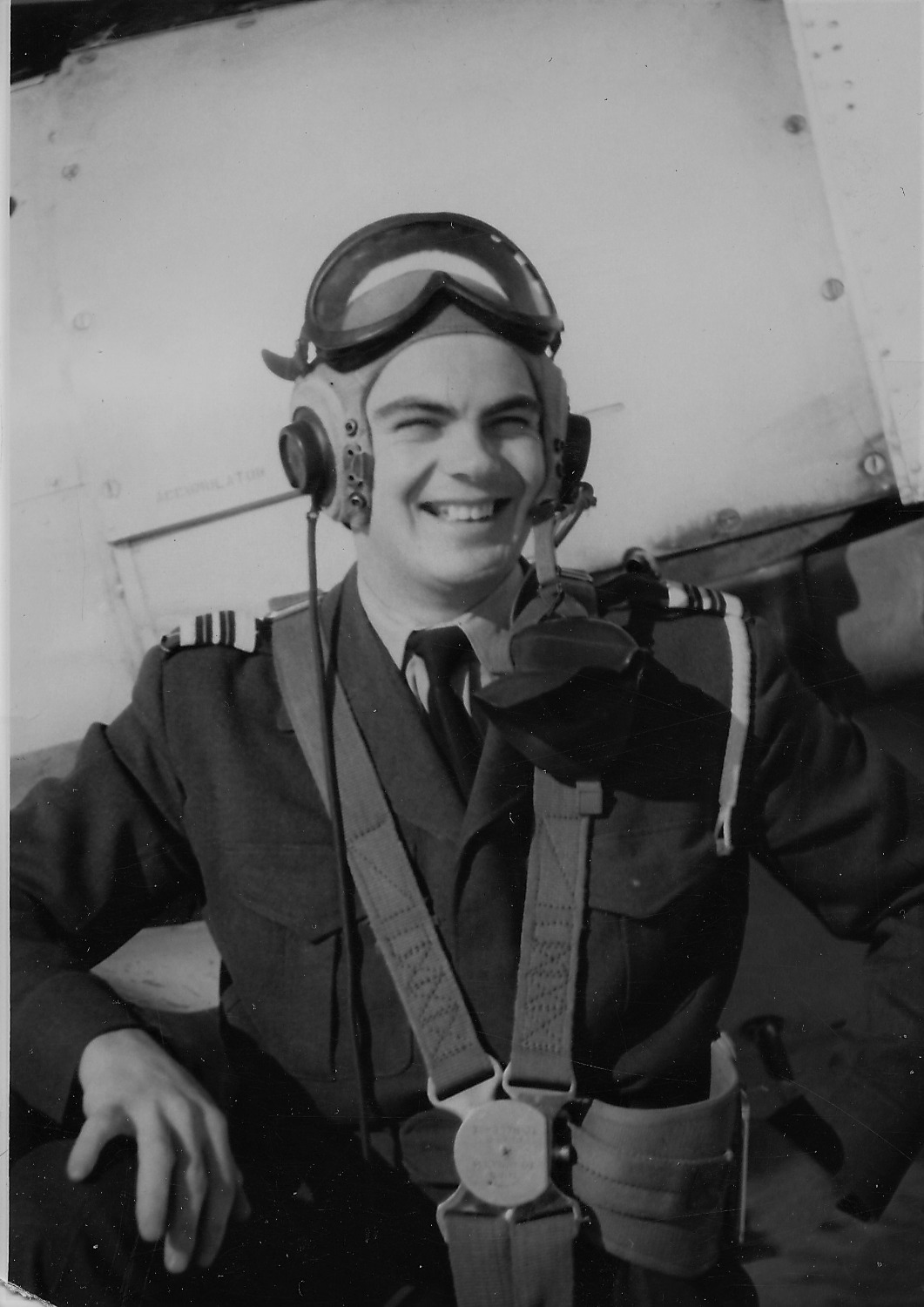
Maynard "Ken" Richard Bolam
Pilot
Story
"My Son Will Return"
By James MacKinnon - Wildland Director
In the late summer of 1958, a small airplane took off from a remote airfield in northern Alberta loaded with firefighting supplies and equipment. Less than ten minutes later it simply vanished, and the two young men on board would become the center of a 19-year-old mystery.
The wildfire season that year stretched on for fatigued firefighters in the dry forests of Alberta. Usually by late summer, the wildfire season begins to subside and the threat of large wildfires is neutralized by cooler temperatures and rainfall. But this wildfire season proved to be different and large wildfires still burned fiercely as little to no rain had been experienced in the previous three months.
In September, a large out-of-control wildfire burned on the Clear Prairie plateau west of Peace River. This wildfire demonstrated extreme wildfire behaviour as high winds and summer drought combined to produce explosive burning conditions. At times, the firefighters watched in disbelief as the wildfire charged through the tinder dry forest and leaped miles ahead of the flaming front line. The widespread smoke alone, raised concerns for the nearby communities and produced days of darkness for the uneasy residents. Vast tracts of valuable timber were being destroyed and it was left to the men and their machines to make a stand.
In 1958, the use of aircraft was still a relatively new concept in wildland firefighting in Canada but moving firefighters and equipment to remote areas quickly and efficiently was vital, and was ensured by using both helicopters and fixed-wing planes. The Clear Prairie wildfire was using several aircraft including a small single engine De Havilland Beaver, owned by Pacific Western Airlines and contracted to the Alberta government. The Beaver proved superior in moving firefighters and equipment as well as providing aerial observations of the wildfire’s position and behaviour. It was built for taking off and landing on short, unimproved runways which were common on large wildfires where runways were simply scratched out of the forest. The aircraft was essential to operations in the Clear Prairie wildfire as it delivered supplies to the five wildfire camps that had been established to accommodate over four hundred men who were fighting the massive blaze.
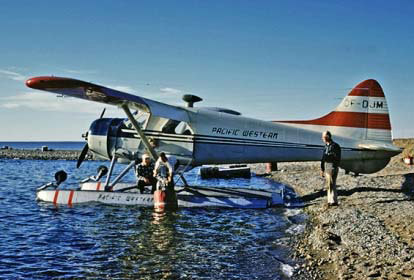 (Photo - Pacific Western Airlines CF-DJM seen parked on a lake refueling three years before it disappeared with Maynard and Dan. Photo Len McHale circa 1955)
Daniel Roberts, an experienced, 38-year-old wildland firefighter from Fort Vermilion, was assigned to take over a large division of fireline. As he had done many times before during that summer, Dan packed his fire gear and willingly left for the unknown, leaving his family and friends behind for what he hoped would be the last assignment of a long wildfire season. These assignments could be an overwhelming challenge with limitless dangers. The effects of fatigue alone have caused injuries, close calls and even death. Extreme fatigue can have a cumulative effect when one is engaged in this line of work for an entire wildfire season.
Maynard Richard Bolam, a 28-year-old skilled bush pilot, took over as pilot-in-charge from Pat Squibb, who was due for a much-needed break. Maynard, a native of Regina and Maryfield, Saskatchewan, had flown with the 105th Squadron in Alberta logging many hours as a search and rescue pilot with the RCAF. He was married, lived in Edmonton, and was employed by Pacific Western Airlines. Maynard was a keen pilot and already had a long career in the flying industry. His experience with the Search and Rescue Squadron gave him invaluable expertise when flying over the harsh, rugged north of Canada’s forests.
On the morning of September 8, 1958, Dan arrived at the Eureka River airstrip and took time to prepare his fire gear before being flown to the remote airstrip at Basnett located along the Chinchaga River, built purposely for the wildfire at Clear Prairie. Maynard, who had just returned from the fireline, bringing back an injured firefighter on a stretcher, met up with Dan and the two men discussed the flight plan. At 1340H, on a sunny but windy afternoon, they accelerated down the runway and lifted off. The wind made for a turbulent climb as the small plane ascended to cruising altitude. The two men settled in their seats for the thirty-minute flight to the Basnett wildfire camp. Maynard, having completed three trips already that day, was comfortable and knew some of the local topography and landmarks which would guide them as visibility would deteriorate due to smoke conditions as they neared their destination.
Seven minutes into the flight as the plane headed north, Maynard radioed and reported their estimated time of arrival at Basnett to be 1414H. This was the last radio contact the two men would make with the ground and the beginning of the 19-year-old mystery.
At the Basnett airstrip, the wildfire radio operator waited patiently for the aircraft to arrive, loaded with needed supplies and crew foreman, Dan. When the aircraft became overdue, the radio operator contacted L.J. Babcock, the assistant forestry superintendent, who commenced an air search with two helicopters. By day’s end, five planes as well as the two helicopters had searched the forested area in hopes of finding the two men and their plane. The very same search and rescue squadron with which Maynard had flown a few years prior, scoured over the flight path of the missing Beaver. Nothing was seen or found. It was described as if the two men “disappeared into silence”.
Maynard, through his training with the RCAF, had been given extensive survival training and his plane was equipped with a survival kit that included food, knife, matches, warm clothing and a sleeping bag. Dan, who had packed his bag for the harsh reality of living on the fireline was also prepared to spend time in the forest. Bush pilots and wildland firefighters are a tough breed. As long as Maynard and Dan were alive, and any injuries weren’t severe, they could survive until rescuers arrived.
Airplanes circled and flew low-level passes over the Beaver’s flight path but after two days, there was still no sight of the two men or their plane. A four-man parachute team was standing by, prepared to jump to the assistance of the downed men if they were spotted from above. Maynard’s mother, Gladys Bolam, quickly became a voice for her son and his passenger. She offered a $500 reward to entice local trappers and hunters to keep an eye out for the missing plane.
The days grew into weeks and then, one month after their disappearance, a fresh blanket of snow covered the forest and hope for finding the men alive was diminishing. But the now-bare trees gave new opportunity to spot a downed aircraft from above and regular patrols of the area were continued by the RCAF. Superintendent of the Peace River Forestry Division, L.P. Gauthier, promised that the Alberta Forest Service would not stop searching. He also reported that promising aerial sightings were checked out by ground crews who were searching heavily timbered green areas along the ravines, but to no avail. Since the search began, fourteen aircraft scoured an area of sixty square miles. The downed plane and its two passengers were the object of one of the most intensive air searches in the history of northern Alberta. Dan, coming from a large family, had brothers who helped in the search and Mrs. Bolam telephoned the Peace River Headquarters every day hoping for news of her son. She never gave up hope that one day he would walk back through her door. She was quoted in the local paper as saying, “My son will return.” When the search was abandoned, like any mother searching for her only son, she wrote hundreds of letters to different government agencies hoping to keep the search going and even spoke to Prime Minister John Diefenbaker, but as time passed, the odds were against the two young men.
On July 4, 1977, two forest officers at Peace River headquarters, Allan Overholt, and Terry Van Nest, discussed the 19-year-old tragedy. Terry, who knew the story, explained how the intensive search for the two men and the missing Beaver back in 1958 came up with nothing. They read the detailed file that was kept at the office which documented all the grid lines flown by the searchers. They agreed it was indeed an extensive search with a sad ending.
The following day, Allan, who was responsible for monthly service checks of remote fire lookout towers, was flying by helicopter between Hotchkiss and Doig fire towers, when he looked down and spotted what he believed to be left-over debris from resource exploration activity. A few minutes passed by, when suddenly, Allan realized what it was he may have just seen. The helicopter turned back, circled the area and was able to land safely nearby. Allan and his pilot made their way through the woods to the site where they made the discovery. Maynard and Dan had been found. The Beaver, weathered and covered with moss, was still in the crash position at the base of a large spruce tree. The tops of several surrounding trees had been severed, falling on the plane and keeping it hidden from view for nineteen years. Maynard’s remains were still in the cockpit while Dan’s were just outside the open cargo door. The only solace was that they likely died on impact, and were together all this time.
The two men were returned to their loved ones, and on September 8, 1977, nineteen years to the day, Gladys Bolam and her family returned to the crash area and scattered Maynard’s ashes as they flew overhead in a small plane, disbelief still resounding in a mother who had lost her only son.
Allan and Terry would return to the crash site and aid the Transportation Safety Board’s investigation. Evidence at the crash site led the investigators to believe that a faulty wing strut caused the ill-fated plane to come down.
On September 9, 2018, sixty years after Maynard and Dan went missing, the CFFF will be honoured to add their names to the Memorial Wall in Ottawa. Gone but not forgotten.
Information for the story was taken from the Peace River Gazette, historical Alberta Forest Service books and a documented interview with Terry Van Nest.